
Supreme Court judge Justice B V Nagarathna has cautioned against the over-reliance on Artificial Intelligence (AI) in the judiciary, emphasising the need for judicial independence from algorithmic influence. She stressed that AI should only serve as a tool and not replace human judgement, which is guided by legal reasoning, constitutional values, and a deep sense of justice.
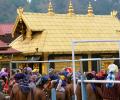
The Supreme Court is hearing petitions related to discrimination against women at religious places, including the Sabarimala temple. A nine-judge bench is examining the scope of religious freedom and the exclusion of women based on age and menstrual status.

The Supreme Court dismissed the Odisha government's plea to modify an order allowing the release of the animated film "Mahaprabhu Jagannath". The court emphasised that creativity, art, and culture should not be curtailed due to sensitivities regarding deity depictions, especially for children's animation.
Supreme Court judge Justice B V Nagarathna stated that judicial independence in the modern era includes freedom from algorithmic influence, emphasising that AI should only assist judges, who must ultimately decide based on constitutional values and human judgment.

Prior to the swearing-in of Justices Hima Kohli, Nagarathna and Bela M Trivedi, only eight women judges, including sitting judge Justice Indira Banerjee, were appointed as apex court judges.
The Supreme Court of India has observed that the practice of excommunicating Parsi women for entering into interfaith marriages is prima facie discriminatory, emphasising that the right of conscience is a birthright.

Supreme Court Justice B V Nagarathna has emphasised the critical importance of an independent Election Commission to ensure the neutrality and integrity of the electoral process in India.

The Supreme Court questioned a woman's sexual assault claim against her former live-in partner, highlighting the consensual nature of their relationship and the absence of a marriage bond.
Supreme Court judge Justice B V Nagarathna stated that judicial independence in the modern era is not just freedom from external power, but also from algorithmic influence, while speaking at a conference in Bengaluru.

Supreme Court Justice B V Nagarathna dissented against the collegium's recommendation to elevate Patna High Court Chief Justice Vipul Manubhai Pancholi to the Supreme Court, citing concerns about seniority, regional representation, and the circumstances of his earlier transfer.
The Supreme Court has criticised the central government for engaging in unnecessary litigation, imposing a fine for challenging a High Court order regarding the dismissal of a CISF official.

The Supreme Court has criticised the central government for engaging in unnecessary litigation, imposing a fine for challenging a High Court order regarding the dismissal of a CISF official.
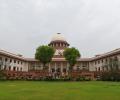
The Supreme Court of India is hearing petitions related to discrimination against women at religious places, including the Sabarimala temple in Kerala, and the scope of religious freedom practised by multiple faiths.

The Supreme Court of India has asserted its jurisdiction to determine what constitutes a superstitious practice within a religion, during a hearing on petitions related to discrimination against women at religious sites.
The Supreme Court of India has voiced concerns about the potential consequences of individuals questioning religious practices in constitutional courts, warning it could lead to the fragmentation of religions and civilisation. A nine-judge Constitution bench is hearing petitions related to discrimination against women at religious places and the scope of religious freedom.
The Supreme Court of India questioned the Centre regarding the eligibility of non-devotees to challenge the customs of the Sabarimala temple in Kerala, during a hearing on religious freedom and discrimination against women at religious sites.

There has never been a woman Chief Justice of India, although Justice B V Nagarathna is expected to become the first -- in 2027 if the convention of seniority is followed.
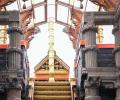
The Supreme Court observed that Hinduism is a way of life, stating that mandatory temple visits or rituals are not necessary to be considered a Hindu; even lighting a lamp at home suffices.

Bollywood actor Jacqueline Fernandez's plea against a Delhi court order to frame charges in a Rs 200-crore money laundering case is scheduled for a Supreme Court hearing. The case involves alleged conman Sukesh Chandrashekhar, who is accused of running an organised criminal network from jail and defrauding individuals.

The Supreme Court of India has emphasised the importance of open access to all temples and 'maths' for everyone, warning that excluding any denomination would negatively impact Hinduism and divide society. This statement was made during hearings on petitions related to discrimination against women at religious sites and the scope of religious freedom.
The Supreme Court has stated that roads cannot be blocked for religious activities and that while religious denominations have autonomy in worship, the government can interfere if secular activities are affected.
The Supreme Court dismissed a petition challenging the exorbitant fee structure in private medical colleges in Rajasthan, stating that self-financing institutions cannot be expected to charge the same fees as government institutions. The court emphasised the country's need for doctors and upheld the Rajasthan High Court's decision.
Bollywood actor Jacqueline Fernandez has withdrawn her plea from the Supreme Court, challenging a Delhi court's order to frame charges against her in a Rs 200 crore money laundering case.

The Supreme Court has directed the Uttar Pradesh government's Special Investigation Team (SIT) to submit a status report on the alleged embezzlement of donation money at the Ram temple in Ayodhya. The court also issued notice to the Shri Ram Janmabhoomi Teerth Kshetra Trust following pleas for a fair and time-bound probe, including demands for a CBI investigation and a CAG audit of the temple trust's finances.

The Supreme Court of India has dismissed the use of information from 'WhatsApp University' as evidence in a case concerning religious freedom and discrimination against women at religious sites, including the Sabarimala Temple.

The Supreme Court on Monday asked the Uttar Pradesh government to apprise it about the possibility of setting up an SIT to probe the alleged embezzlement of donations at the Ram temple in Ayodhya and cautioned the litigants not to politicise the issue.

The Supreme Court has agreed to examine Sebi's challenge to a Securities Appellate Tribunal (SAT) decision that cleared Wadia Group Chairman Nusli Wadia, Bombay Dyeing, and others of allegations of fraudulent financial reporting.

The Supreme Court is set to hear a batch of petitions on July 13 seeking a fair and time-bound probe into the alleged embezzlement of donations at the Ram temple in Ayodhya, with petitioners requesting a CBI investigation and a CAG audit of the temple trust's finances.

The Supreme Court delivered a split verdict on the constitutional validity of Section 17A of the Prevention of Corruption Act, which mandates prior sanction for probing government servants in corruption cases. The case will now be placed before the Chief Justice for forming a larger bench.

'Justice B V Nagarathna has excellent human qualities and is a stickler for the law.'
The Supreme Court of India refused to entertain a petition from a judicial officer challenging the recommendation of junior officers for appointment as Himachal Pradesh High Court judges. The court stated it would not "open a pandora's box" by judicially reviewing collegium proceedings, emphasising the collegium's subjective satisfaction in such matters. The petitioner later withdrew his plea to pursue administrative or judicial remedies at the High Court level.
The Supreme Court has scheduled a hearing for June 29 on a public interest litigation (PIL) seeking the registration of an FIR and a time-bound probe into the alleged embezzlement of donations received by the Shri Ram Janmbhoomi Teerth Kshetra Trust in Ayodhya.

The Supreme Court has directed the government to raise awareness, compensate, and protect vulnerable individuals who have lost money in cyber scams. The court's remarks came while granting bail to an accused in a cybercrime case, emphasizing the need for public education and cybersecurity awareness.

The Supreme Court has agreed to examine whether a law banning married couples facing secondary infertility from using surrogacy to have a second child amounts to a restriction by the State on the reproductive choices of citizens.
The Supreme Court of India is examining the conflict between an individual's 'right to be forgotten' and the freedom of the press, focusing on the removal of online news and judicial records related to acquitted individuals.
The Supreme Court has urged political leaders to promote fraternity while declining to entertain a PIL seeking guidelines on political speeches, emphasizing the need for objectivity and even-handedness in addressing concerns about hate speech and constitutional values.
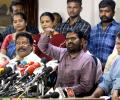
The Supreme Court has suggested Tamil film director and politician Seeman tender an unconditional apology to an actor who accused him of rape in 2011. The court is hearing Seeman's plea to quash the case against him.

The Supreme Court of India has questioned the continued provision of reservation benefits to children from economically and educationally advanced families within backward classes, highlighting concerns about social mobility and fairness.

The Supreme Court has allowed a plea seeking the premature release of Rohit Chaturvedi, a convict in the 2003 murder case of poet Madhumita Shukla, emphasising reformation over retribution.

The Supreme Court has taken exception to AIIMS' plea to set aside its order allowing a 15-year-old rape survivor to terminate her 30-week pregnancy, urging the Centre to amend the law to permit abortion beyond 20 weeks in such cases.
